Preparing for the SBI PO exam is not merely about clearing a competitive test; it is about preparing yourself for a career in leadership within India’s largest public sector bank. Every year, lakhs of aspirants apply for the Probationary Officer examination conducted by State Bank of India, but only a very small fraction finally earn the appointment letter. This gap between aspiration and achievement exists not because the exam is impossible, but because most candidates lack a clear, long-term roadmap.
This SBI PO Knowledge Guide 2026 is written as a complete preparation manual, starting from the absolute basics and gradually moving toward advanced exam-oriented strategies. It focuses not only on what to study, but also on why to study, how to study, and when to study each component. The goal is to help aspirants build conceptual clarity, exam temperament, and confidence in a structured manner.
Understanding the SBI PO Role Before Exam Preparation
Before beginning preparation, it is important to understand what an SBI Probationary Officer actually does. An SBI PO is not just a bank clerk with a higher salary. It is a managerial and leadership role that involves customer handling, loan processing, risk assessment, branch administration, compliance, and team supervision. SBI designs its PO exam to identify candidates who can think logically, communicate clearly, and take responsibility under pressure.
This is why the SBI PO exam tests much more than academic knowledge. It evaluates decision-making ability, analytical thinking, emotional intelligence, and awareness of the economic and banking environment. Aspirants who understand this purpose early tend to prepare with the right mindset and outperform those who treat the exam as a memory-based test.
SBI PO Exam Structure Explained in Depth
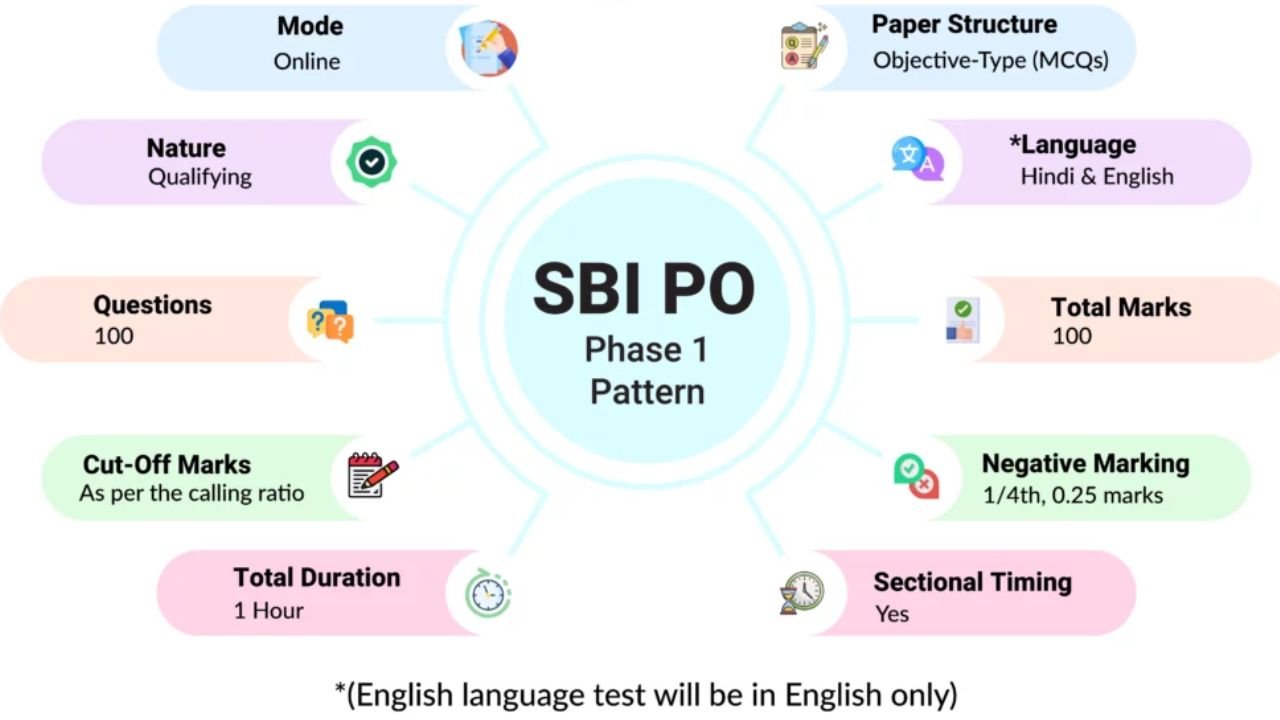
The SBI PO selection process consists of three stages: Preliminary Examination, Main Examination, and Interview. The Preliminary stage acts as a screening test and focuses heavily on speed and accuracy. While marks obtained in prelims do not count in the final merit list, failing to clear sectional and overall cut-offs eliminates a candidate immediately.
The Main examination is the real game-changer. It includes objective tests for reasoning, data analysis, general awareness, and English, along with a descriptive test. This stage tests depth of understanding, application of concepts, and the ability to handle complex data under time constraints. The interview stage evaluates personality traits, clarity of thought, confidence, and suitability for a managerial banking role.
Understanding this structure helps aspirants avoid the common mistake of preparing all stages in the same way.
SBI PO Syllabus: What It Really Demands From You
The SBI PO syllabus may appear similar to other banking exams, but its question framing and difficulty level are more advanced. Quantitative Aptitude requires not only calculation skills but also interpretation and logical application of numbers. Questions often integrate multiple concepts, demanding clarity rather than formula memorization.
Reasoning Ability in SBI PO goes beyond basic puzzles. Candidates are expected to analyze complex seating arrangements, logical deductions, and critical reasoning scenarios. This section tests patience, visualization skills, and the ability to stay calm under pressure.
English Language focuses heavily on reading comprehension, inference-based questions, and contextual vocabulary. Grammar rules alone are insufficient; understanding tone, intent, and structure of passages is critical. The descriptive English test further evaluates clarity of expression and organized thinking.
General Awareness and Banking Awareness are decisive sections in the Mains exam. Questions often connect current affairs with static banking concepts, requiring aspirants to understand economic events rather than memorize headlines.
Laying the Conceptual Foundation: The Most Ignored Phase
Most aspirants underestimate the importance of the foundation phase. They jump directly into mock tests or advanced problems without mastering basics, which leads to confusion and low confidence later. For SBI PO, a strong foundation means understanding why formulas work, how reasoning patterns are formed, and how language conveys meaning.
In quantitative aptitude, this phase includes mastering arithmetic concepts such as percentages, ratios, averages, time-speed-distance, and profit-loss. These topics form the backbone of most questions and appear in different combinations.
For reasoning, foundation building involves understanding how to approach puzzles logically rather than guessing. Visualization techniques and step-by-step problem breakdown are essential here. In English, developing a habit of daily reading is more effective than memorizing vocabulary lists.
Subject-Wise Deep Strategy for SBI PO 2026
Quantitative Aptitude preparation for SBI PO requires gradual progression. Aspirants should start with concept clarity and slowly move toward mixed and high-level questions. Speed comes naturally when concepts are understood deeply. Attempting shortcuts without clarity often backfires in complex problems.
Reasoning Ability requires exposure and repetition. Initially, puzzles may take a long time to solve, but consistent practice builds familiarity. Over time, aspirants start recognizing common structures and reduce solving time significantly.
English Language demands comprehension over cramming. Regular reading of newspapers, editorials, and analytical articles improves understanding, vocabulary, and grammar simultaneously. Writing practice helps organize thoughts clearly, which is essential for the descriptive test.
General Awareness should be approached as a daily habit, not a last-minute task. Understanding current events, government schemes, RBI policies, and banking terminology helps answer analytical questions confidently.
Designing a Realistic SBI PO Study Plan for 2026
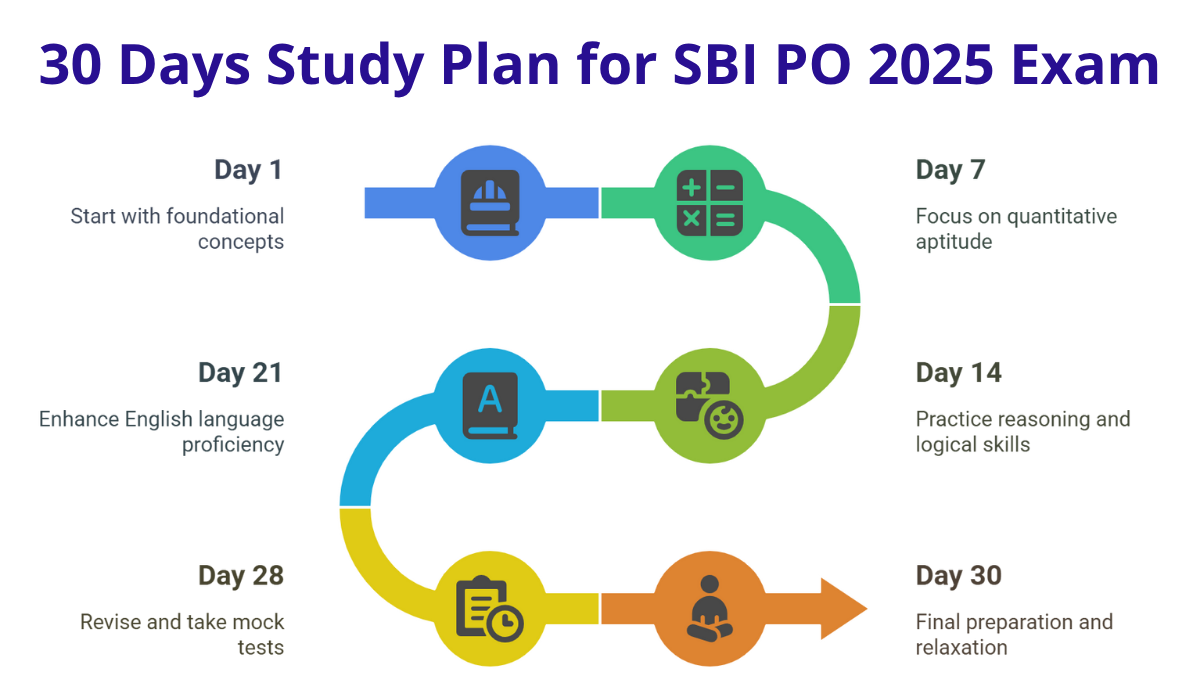
A successful study plan is realistic, flexible, and sustainable. Beginners should focus on learning concepts first, while working professionals must optimize limited time. Studying for long hours without focus is less effective than shorter, high-quality study sessions.
Daily revision, weekly assessments, and monthly evaluations ensure steady progress. Aspirants should periodically reassess their strategy and adjust based on performance rather than blindly following a fixed plan.
The Role of Mock Tests in SBI PO Success
Mock tests play a crucial role in SBI PO preparation, but only when used correctly. Writing mock tests helps simulate exam pressure, improve time management, and identify weak areas. However, improvement comes from mock analysis, not from the number of mocks attempted.
Analyzing mistakes, understanding why an answer was wrong, and identifying alternative approaches lead to real improvement. Toppers treat mocks as learning tools, not scorecards.
Preparing for the SBI PO Interview With Confidence
The interview round evaluates whether a candidate can represent SBI professionally. Questions may revolve around banking awareness, current affairs, personal background, and situational judgment. Clear communication, honesty, and confidence matter more than perfect answers.
Regular reading, mock interviews, and self-reflection help candidates perform well. Interview preparation should start early, not after clearing the Mains exam.
Psychological Discipline and Consistency in Preparation
Mental discipline is as important as academic preparation. SBI PO preparation is a long journey, and aspirants often face self-doubt, burnout, and comparison anxiety. Maintaining consistency, trusting one’s strategy, and avoiding unnecessary distractions are essential for success.
Success in SBI PO is rarely sudden; it is the result of small, consistent efforts over time.
SBI PO 2026 as a Career Opportunity
The SBI PO exam is not just a test—it is a gateway to a respected and stable career. With the right knowledge, strategy, and mindset, clearing SBI PO 2026 is achievable for any dedicated aspirant. This SBI PO Knowledge Guide 2026 is designed to provide clarity and direction, but success ultimately depends on disciplined execution.
Those who prepare with patience, purpose, and persistence do not just clear the exam—they build the foundation for a rewarding professional life.